
Wildlife Loop State Scenic Byway, Custer State Park

Bison calf

Prairie dogs

Pronghorn
Prairie Animals
Between the Mississippi River and the Rocky Mountains is a huge stretch of prairie known as the Great Plains. Since the animals here are used to cold winters and hot summers, they can journey long distances searching for food and water.
Bison
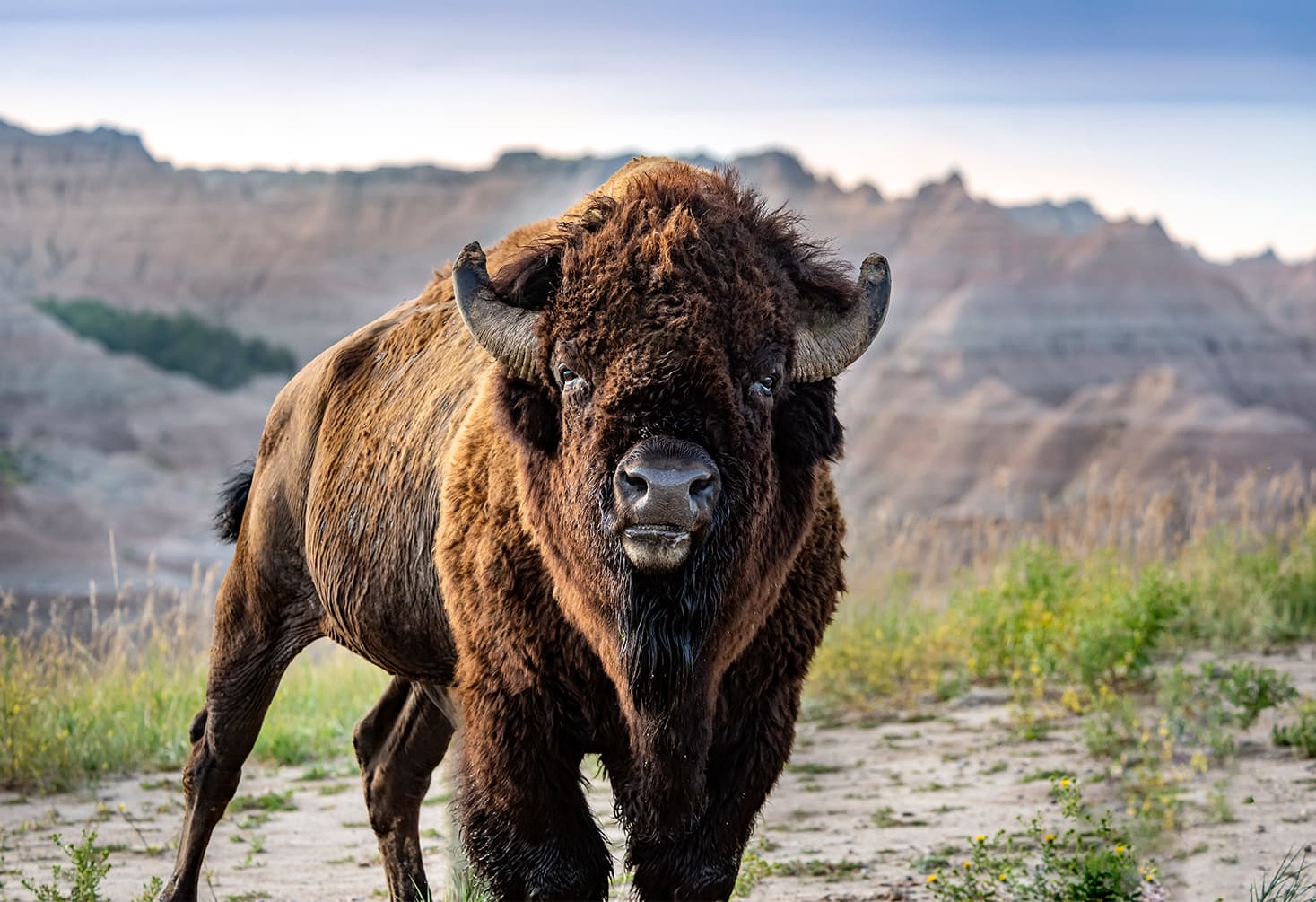
In the late 1700s, as many as 60 million bison roamed the grasslands of North America. By 1889, decades of overhunting and habitat loss shrank the population to 541, but now the bison are returning. Find free-roaming herds of America's national mammals at Custer State Park, Badlands National Park and Wind Cave National Park.
Fun Facts About Bison
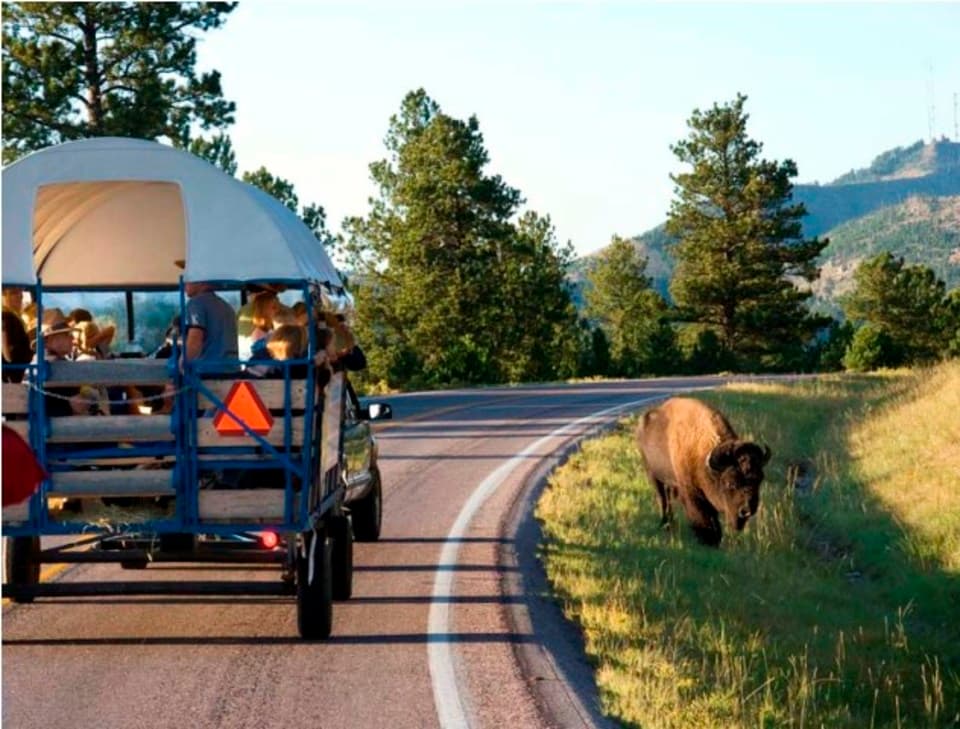
Bison are quite comfortable around cars in Custer State Park. You can see them right outside your window on the Wildlife Loop.
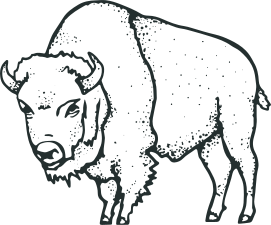
A baby buffalo calf is called a "red dog" for the color of its fur.
Bison are often called buffalo. The word comes from French fur trappers who called them "boefs."
Bison are usually content to move slowly but can run up to 35 miles an hour when properly motivated.
Prairie Dogs
There are five species of prairie dogs in North America. In South Dakota, the most common is the black-tailed prairie dog. A distant relative of the squirrel, prairie dogs live together in groups of burrows called colonies. They talk to each other through shrill barks, so European explorers compared them to dogs. Prairie dogs have different calls for different predators and special calls for when it's safe to come outside.
Pronghorn
Commonly called antelope, pronghorns live throughout western South Dakota. They are the second-fastest land animal in the world, trailing only the cheetah. Both males and females have horns, but a buck’s horns grow longer than a doe’s. Look for them on Wildlife Loop Road at Custer State Park.

Mountain lion

Mountain goat
Mountain Animals
The Black Hills region of South Dakota is home to unique creatures you can’t find anywhere else. Black Hills animals are adapted for higher elevations, which means they are comfortable calling the mountains home.
Mountain Lion
Mountain lions, also called cougars, pumas and panthers, are listed in the dictionary under more names than any other animal. Seeing a mountain lion in the wild is rare, these big cats are nocturnal and stealthy. However, South Dakota Game, Fish & Parks estimates that about 300 live in the Black Hills.
Mountain Goat
Mountain goats are not native to South Dakota but seem right at home in the rocky Black Hills. Most goats in the Black Hills descend from a group of six that escaped from then-open Custer State Park Zoo in the 1920s. Today you can find these nimble climbers scaling the side of Mount Rushmore, especially if visiting during morning hours.

Duck

Pheasant

Walleye

Paddlefish
Birds
What birds can you see around your home? Look as hard as you want, but you probably won’t see a ring-necked pheasant or a flock of ducks like you would in South Dakota.
Waterfowl
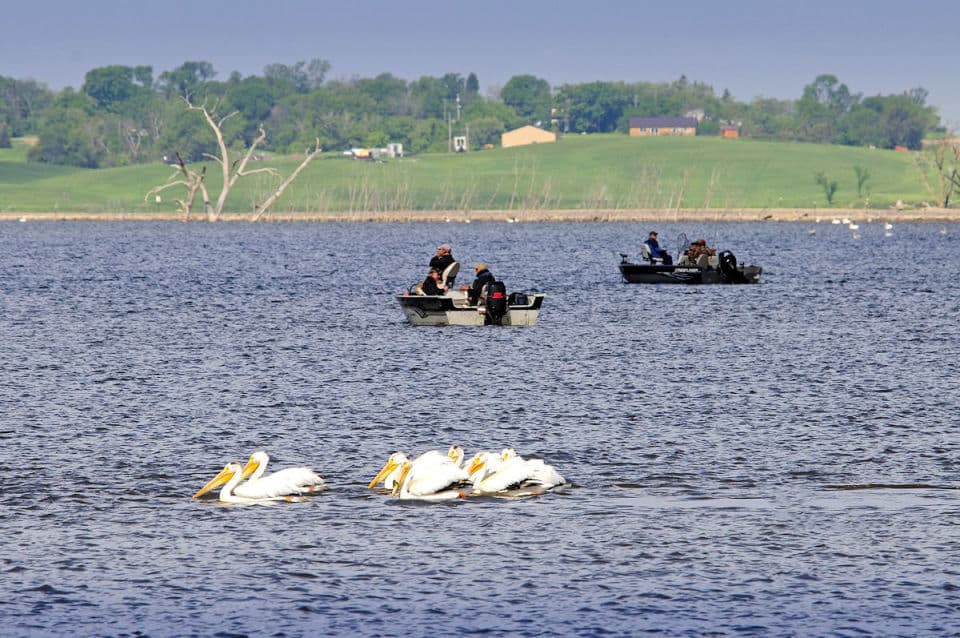
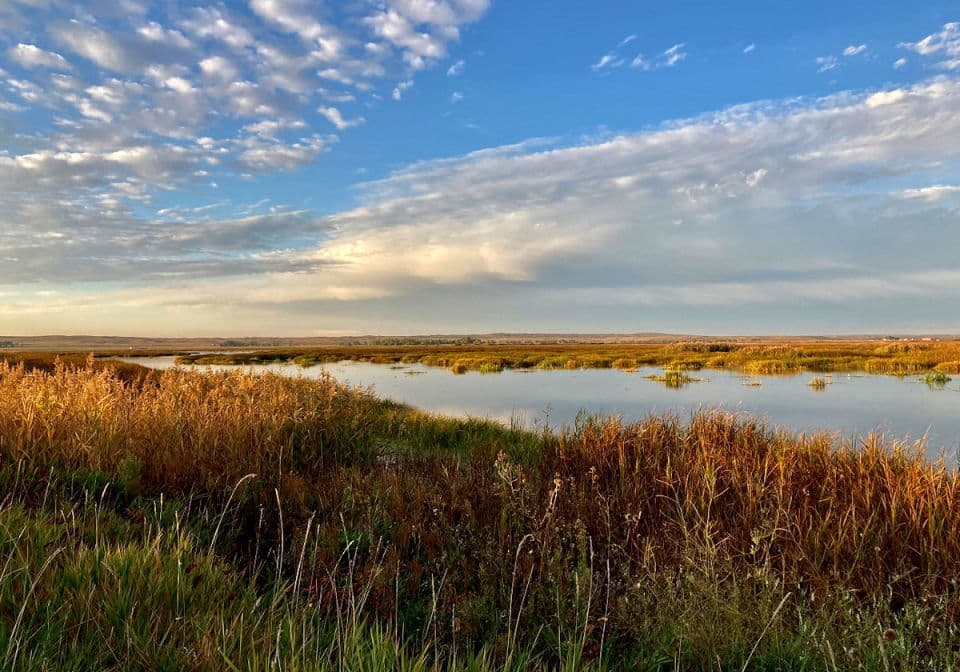
South Dakota's wetlands are an ideal habitat for ducks, geese, and countless other water-loving birds. That's because the state’s east side lies in the Prairie Pothole Region, a tract of grassland full of sloughs and ponds. These small, sheltered bodies of water make the perfect nursery for ducklings and goslings.
Ring-Necked Pheasant
The state bird of South Dakota, pheasants are native to Asia but have been introduced as a game species (meant for hunting) worldwide. They thrive in South Dakota, thanks to plenty of grassland habitat and crops to eat. Males, or roosters, are brightly colored with shades of red, green and orange. Female pheasants, or hens, are tan and brown, helping them blend with the grass. More than 50% of North American migratory waterfowl call the Prairie Pothole Region (Midwest grasslands dotted with lakes) home.
Fish
Why does South Dakota have so many lakes? Ice. Thousands of years ago, Ice Age glaciers scooped out huge chunks of earth. Over time, the glaciers melted and the scrapes filled with water, providing habitat for South Dakota’s fish.
Walleye
Of all the fish in the Missouri River and South Dakota's lakes, walleyes are the most popular fishing target. These predatory fish travel up to 50 miles a night searching for food and can live more than 20 years in the wild.
Paddlefish
One of South Dakota’s weirdest fish is its oldest—fossil records show the paddlefish has evolved very little over the last 125 million years. These sharklike creatures use electric signals in their paddle, called a rostrum, to find plankton to eat. It’s like underwater Marco Polo!
Places to Spot Wildlife

Custer State Park
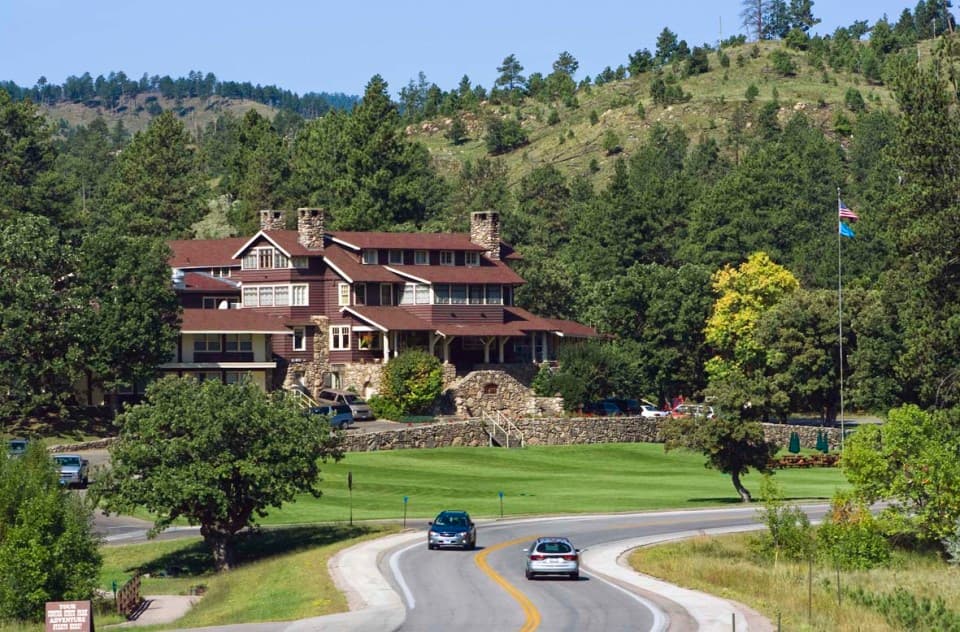
From the 56,000-acre Norbeck Wildlife Preserve to the park's buffalo, elk, bighorn sheep, mountain goats, antelope, deer and friendly burros, you'll be delighted with what you spot exploring Custer State Park. For maximum beauty, cruise one of the park's scenic byways, especially the Wildlife Loop State Scenic Byway.

Badlands National Park
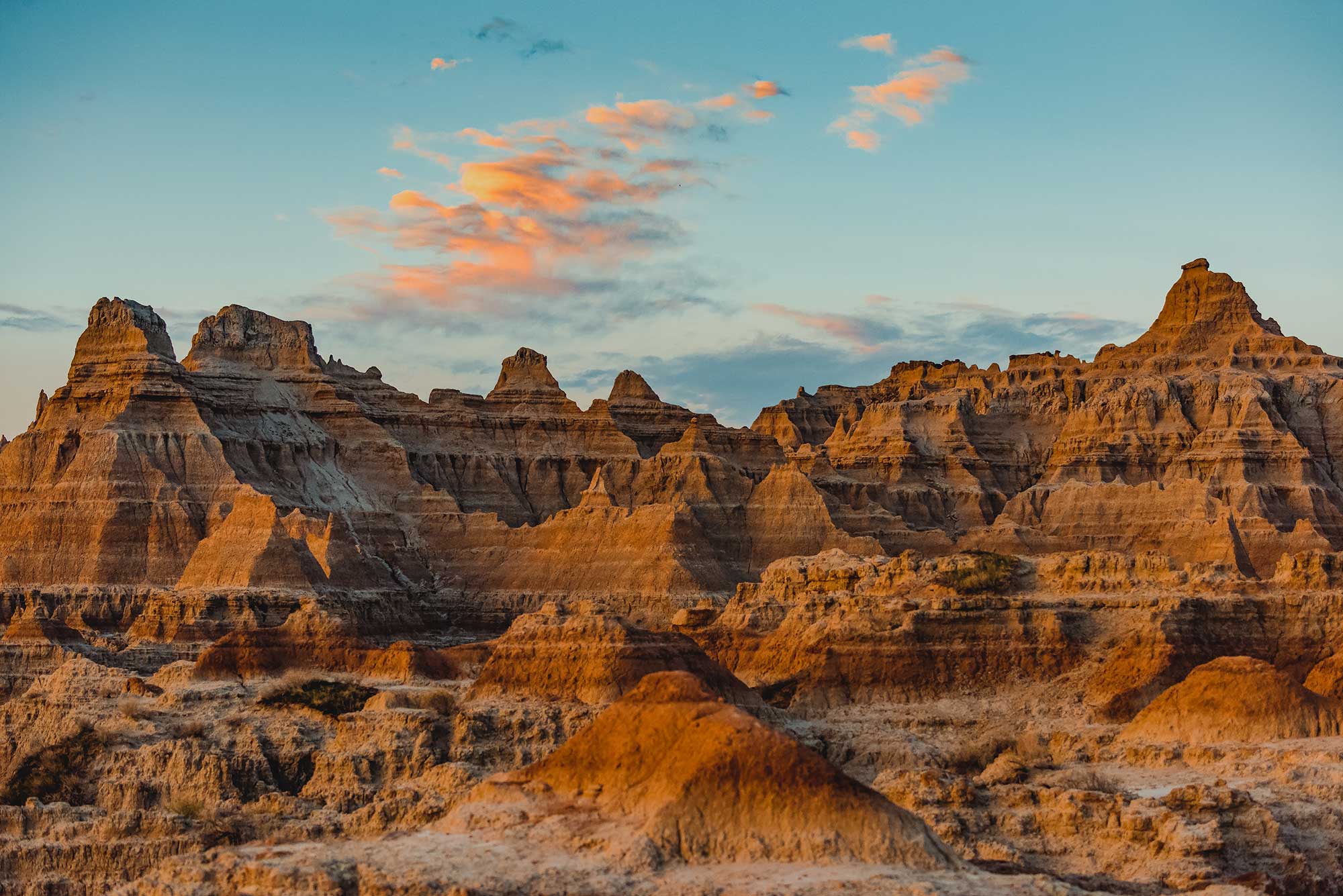
The vast and craggy Badlands scenery is home to buffalo, antelope, deer, prairie dogs, the black-footed ferret and many species of birds. Chances are good you'll see a lot on that list while cruising Badlands Loop State Scenic Byway, but don't forget to pull over and explore the park's 244,000 acres on foot.

Black Hills National Forest
One look upon this rich forest and you'll understand why many Native tribes consider this land sacred. From the twists and turns of Iron Mountain Road to the deep canyon views of Spearfish Canyon State and Forest Service Scenic Byway — and every bit of community and wildlife in between — there's road-trip magic to be made in western South Dakota.

Missouri River
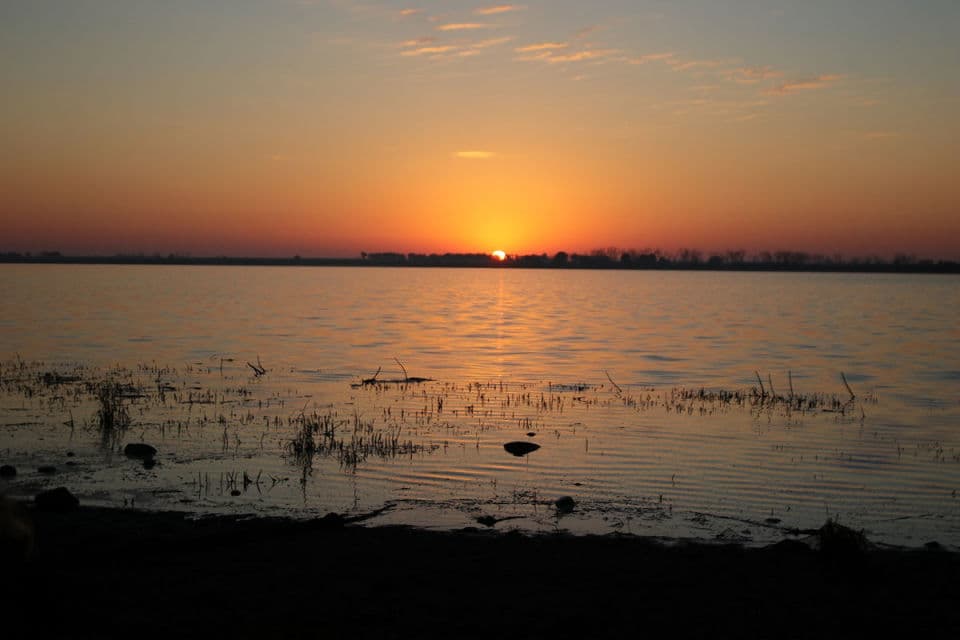
This beautiful river divides the state in half, offering hidden gems and popular rec spots like Lewis & Clark Recreation Area near Yankton. You can catch a variety of birds, including bald eagles, near the river. And if you take in the Mighty Mo' while cruising the Native American National and State Scenic Byway, you're guaranteed a road trip to remember.
Find Wildlife Viewing Attractions
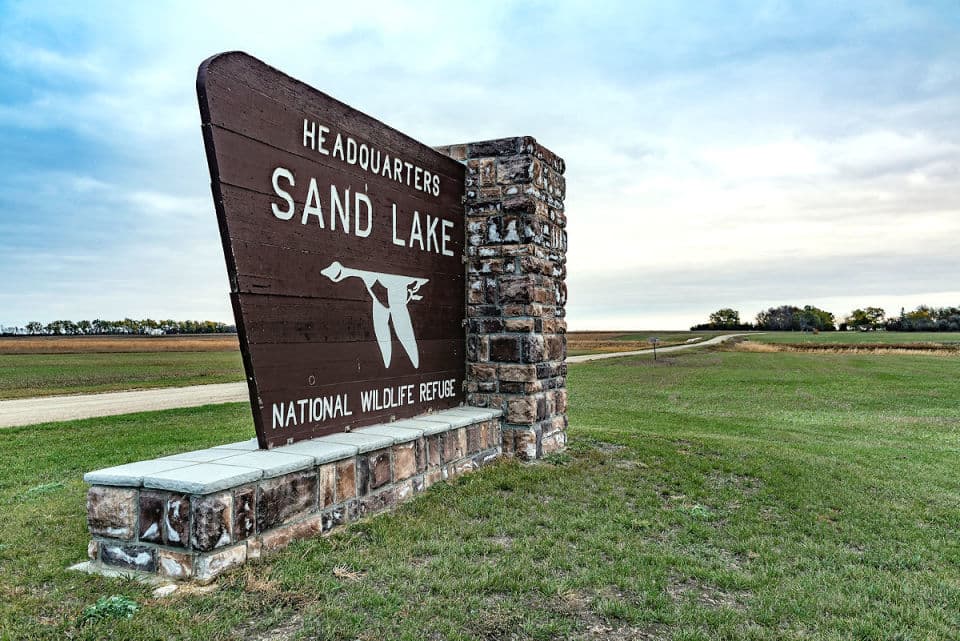
Want to get up close to South Dakota wildlife? Try a jeep tour, peruse the zoo or visit a national wildlife refuge.



Explore More


Explore South Dakota Wildlife At Home!
Prepare the kids — and kids at heart — for real-life wildlife viewing using these online lessons and downloadable games. Start with this list of fun facts about bison, fish and birds, then spot the animals in person when you arrive in South Dakota.