


South Dakota is wild at heart, boasting big landscapes and unique geology begging to be captured on camera. Make the most of your Midwest photography trip by exploring natural wildlife habitats and urban adventures and witnessing our beloved dark skies, from the Badlands to the Big Sioux River. Discover the best South Dakota attractions for photography enthusiasts.
Best Places in South Dakota to Photograph
Here, the Great Plains meet the West, where farms and ranches exist harmoniously alongside some of North America's most dramatic terrain. Whether you're drawn to jagged rock formations, shimmering glacial lakes or wide-open prairie skies, South Dakota delivers an endlessly photogenic backdrop from east to west.

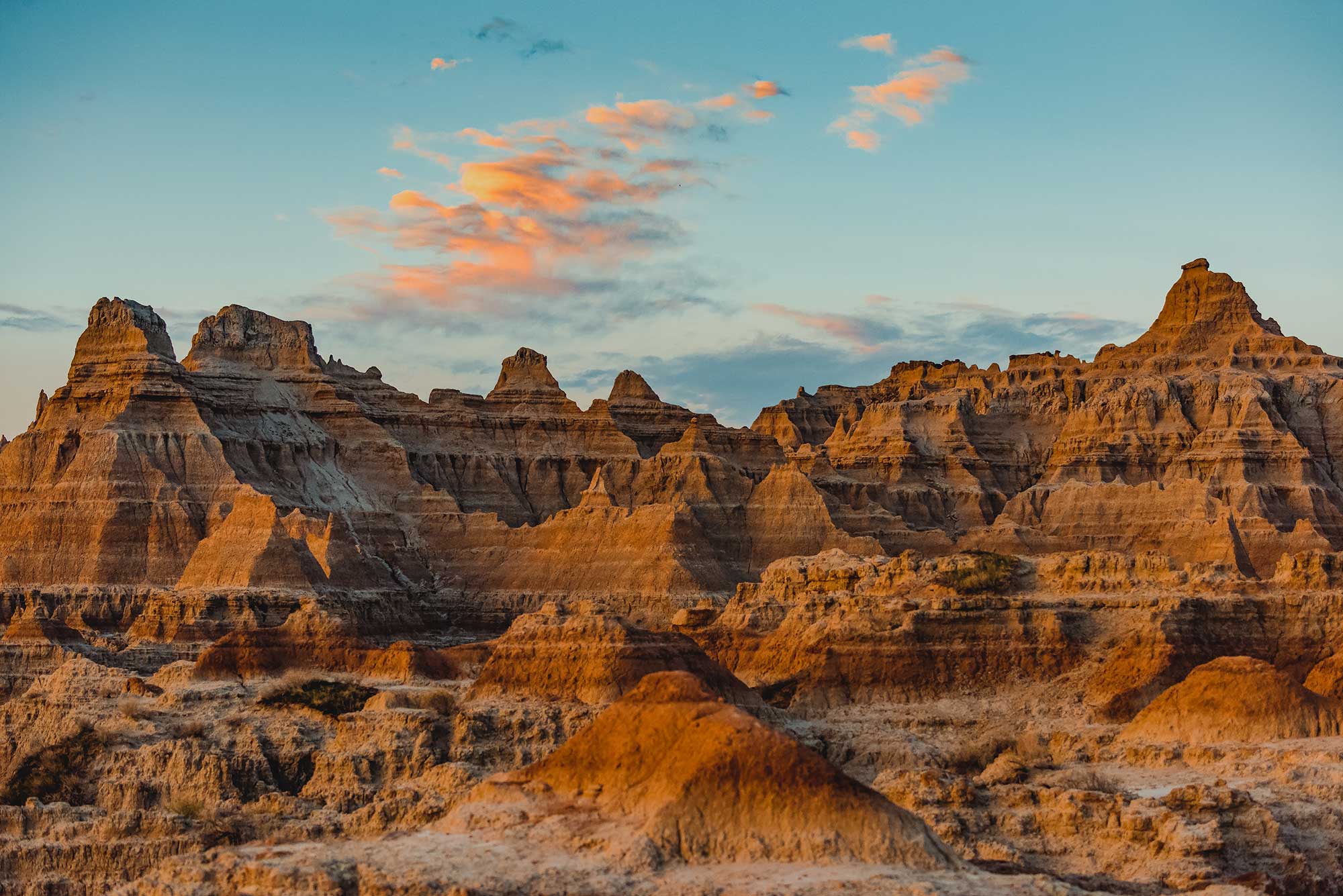
The otherworldly terrain of Badlands National Park puts on a show for photographers.

Photo-worthy perspectives along Notch Trail in the Badlands.

Cruise the Wildlife Loop Road in Custer State Park, with animals around every turn.

A prime moment for herd shots during Custer State Park’s Buffalo Roundup.

Feathered sights at Waubay National Wildlife Refuge.
Badlands Photography
Few landscapes in the world stop photographers in their tracks the way the Badlands do. Sculpted across millions of years by wind and water, the park's layered buttes and razor-edged spires shift dramatically with the light, creating opportunity for a new photograph every hour.
Shoot golden hour at the Big Badlands Overlook, where the Yellow Mounds glow amber and the eroded canyon walls cast shadows across the valley floor. At sunrise, the Pinnacles Overlook offers sweeping views of the northern unit with soft, cool light before the heat of the day sets in. For a more intimate shot, the Notch Trail leads hikers through a slot canyon before opening to a bird's-eye view of the White River Valley below.
Wildlife is abundant throughout the park, making the Badlands one of South Dakota's best locations for landscape and wildlife photography in a single outing. Bison, bighorn sheep and black-tailed prairie dogs are regular subjects along the Loop Road and throughout the mixed-grass prairie.
Pro tip: Camp at Badlands Campground or Cedar Pass Lodge to position yourself for blue hour and dawn light without a long drive.
South Dakota Wildlife Photography
SoDak wildlife runs amok across hills and prairies and soars through the sky. From bison herds shaking the Badlands floor to pronghorn sprinting across open grasslands, the state serves up subjects that will stop you mid-step. Pack your longest lens and your patience, because South Dakota wildlife has a way of rewarding both.
West River Wildlife
The Black Hills and Badlands are home to some of the most iconic wildlife in North America. Custer State Park alone hosts one of the largest publicly owned bison herds in the world, with nearly 1,400 animals roaming across 71,000 acres. The Wildlife Loop Road is the park's premier photography route, especially during the annual Custer State Park Buffalo Roundup in September, when ranchers gather the herd on horseback. Pronghorn, mule deer, elk, mountain goats and burros also populate the western parks. Wild turkeys and raptors, including golden eagles and red-tailed hawks, are regular sightings along park roads and trail edges.
East River Wildlife
Eastern South Dakota trades dramatic terrain for wide-open wetlands and prairie that attract some of the most diverse birdlife in the Midwest. The Prairie Pothole Region, a landscape of shallow glacial lakes and marshes, is a critical breeding ground along the Central Flyway and draws millions of migratory waterfowl each spring and fall. Photographers can expect to find mallards, teal, sandhill cranes and white pelicans, along with white-tailed deer along tree lines and creek corridors.
Each spring and fall, thousands of waterfowl and other waterbirds migrate through this region, taking advantage of the nutrient-laden wetlands of Sand Lake National Wildlife Refuge and the surrounding wetland prairie.
South Dakota’s Most Photogenic Wildlife
Great Plains & Glacial Lakes
Eastern South Dakota's prairies are a landscape made for wide-angle lenses. Each glacial lake shimmers with its own character. Pickerel Lake, the state's deepest natural lake, is bordered by hardwood forest and reflects the sky with remarkable clarity. Roy Lake State Park offers sandy shorelines and quiet mornings that reward early risers with glassy, mirror-like water. Lake Kampeska near Watertown draws great blue herons and shorebirds that wade along the marsh.
Find more photogenic SoDak lakes.
Beyond the lakes, the open prairie boasts vast skies and an endless horizon. Sunsets here consume the sky, igniting the grass with shades of pink, orange and deep red. Photographers unite, every evening is a new opportunity to get the shot as every minute casts new, blooming colors.

An International Dark Sky Park, the Badlands' starry skies are a dream for night photography.

Watch night skies frame rugged granite formations along Needles Highway.

Clear night skies can be found throughout South Dakota.
An International Dark Sky Park, the Badlands' starry skies are a dream for night photography.
Watch night skies frame rugged granite formations along Needles Highway.
Clear night skies can be found throughout South Dakota.
Dark Sky Photography in South Dakota
Once the sun sets, the sky sparkles with stars. South Dakota is one of the best states in the country for astrophotography. The state averages a 3 on the Bortle Scale, a measure of night-sky darkness, where 1 is the darkest possible sky and 9 is a bright inner-city sky. That rating puts South Dakota in rare company, offering skies dark enough to photograph the Milky Way's core with the naked eye on a clear night. Find out what makes South Dakota’s dark skies stand out.
Yes, conditions are exceptional. The Milky Way's galactic core is best visible from late spring through early fall, with peak visibility in July and August. In the Badlands — one of the few places in the country to be named an International Dark Sky Park — the park's remote interior and limited light pollution make it one of the premier dark sky locations in the National Park System. The Black Hills also offer excellent shooting, with elevated vantage points that place the Milky Way above pine-covered ridgelines.
For dark sky photography east of the river, Sica Hollow State Park near Sisseton and the open prairies south of the Coteau offer minimal light pollution and dramatic, flat horizons that place the full arc of the Milky Way above the landscape.
Best practices for dark sky photography in South Dakota
- Plan your shoot around the new moon for the darkest skies.
- Use a wide-angle lens with a low f-stop (f/2.8 or wider) and a shutter speed between 15 and 25 seconds.
- Check NPS fire and access conditions before heading into remote areas at night.
- Let your eyes adjust for at least 20 minutes before shooting.
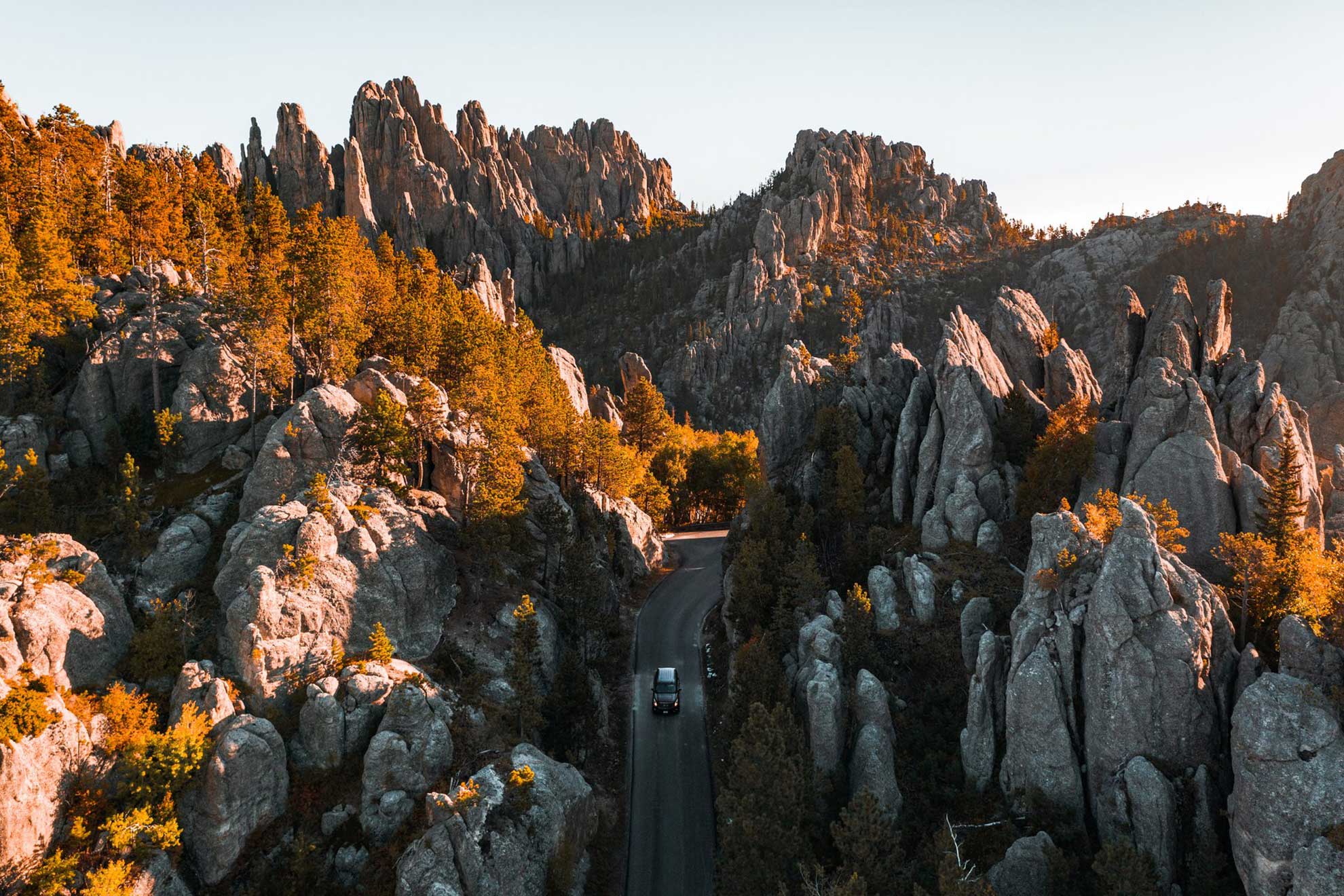
Striking formations from every angle along Needles Highway.

Witness fall colors sweep through Spearfish Canyon.

Underground wonders at Wind Cave National Park.
Striking formations from every angle along Needles Highway.
Witness fall colors sweep through Spearfish Canyon.
Underground wonders at Wind Cave National Park.
Unique Geology & Landscapes
Millions of years of geological history show up in South Dakota's landscapes. Out west, the Badlands stack sedimentary layers into dramatic spires and shadowed canyons, while the Black Hills push ancient Precambrian granite skyward in formations you won't find anywhere else in the Midwest. The Needles Highway frames jagged rock silhouettes against pine-covered peaks, and Spearfish Canyon's limestone walls go gold and orange come fall. Head east and the terrain shifts entirely. The prairies roll across the horizon, dotted with glacial lakes and wetlands that pull thousands of migratory birds every year. Wind Cave National Park rounds it out underground, hiding boxwork calcite formations found almost nowhere else on Earth. Bring your binoculars and a long-view lens to capture the majesty of South Dakota geology.
SoDak Photography Tours
Not sure where to start? South Dakota's photography tour operators know exactly where to be and when to be there. From guided Badlands workshops to wildlife safari jeep tours, these outfitters provide tips and tricks of the trade while making location scouting a breeze.
Black Hills Photography Tours
Discovery Tours, based in Lead, offers fully narrated, day-long tours throughout the Black Hills. Black Hills Tour Company offers private tours with a local guide and photographer, capturing the very best of the Black Hills. Tony Sweet offers scheduled group tours to photograph the Badlands. An internationally acclaimed fine art nature photographer, Tony and his wife provide a five-day workshop to learn, explore and, most importantly, shoot. Discover the Badlands with Hunt’s Photo Adventures, including in-field instruction at each location.
Wildlife Photography Tours & Trips in the Black Hills
Hop aboard and aim your camera — the best shots may come from the back of a jeep! Roll through Custer State Park on the Buffalo Safari Jeep Tour to experience the open air while learning about the park and its history. The Black Hills Tour Company offers more than just photo tours. Their vans take you around the area for an in-depth perspective of the Hills. Outside our regional tour companies, many national outfitters offer tours around Mount Rushmore National Memorial, the Black Hills and beyond!
Day Tours Across South Dakota
Prefer to let someone else do the driving wherever you are? A variety of outfitters offer day tours throughout the state, from wilderness adventures to city guides that all provide ample opportunity for travel photography. Sit back, buckle up and aim your lens. Discover in South Dakota.
Get Inspired


Tips for Photographing South Dakota Nature & Wildlife
Camera Settings to Capture Action
- Shutter Speed: Use high speeds to freeze motion.
- Autofocus: Continuous autofocus helps to track moving animals.
- Aperture: Start with a slightly stopped-down aperture to improve sharpness and depth of field.
- ISO: Use Auto ISO to handle rapidly changing light while maintaining necessary shutter speeds.
Behavior & Ethics
- Chase Light, Not Animals: Position yourself for great lighting (sunrise/sunset) and wait for the wildlife to enter the scene.
- Know Behaviors: Anticipate actions by studying animal habits, allowing you to catch the "moment before the moment."
- Respect Distance: Do not stress animals by encroaching on their space. Use a long lens to get close-up shots from a safe, ethical distance.
Frequently Asked Questions
Planning Tools
Order Your Free 2026 Vacation Guide
Find our Vacation Guide, state map, and other free publications to aid in your travel planning.

Sign Up for the E-Newsletter
Receive monthly inspiration about places to see, activities to try, and upcoming events.
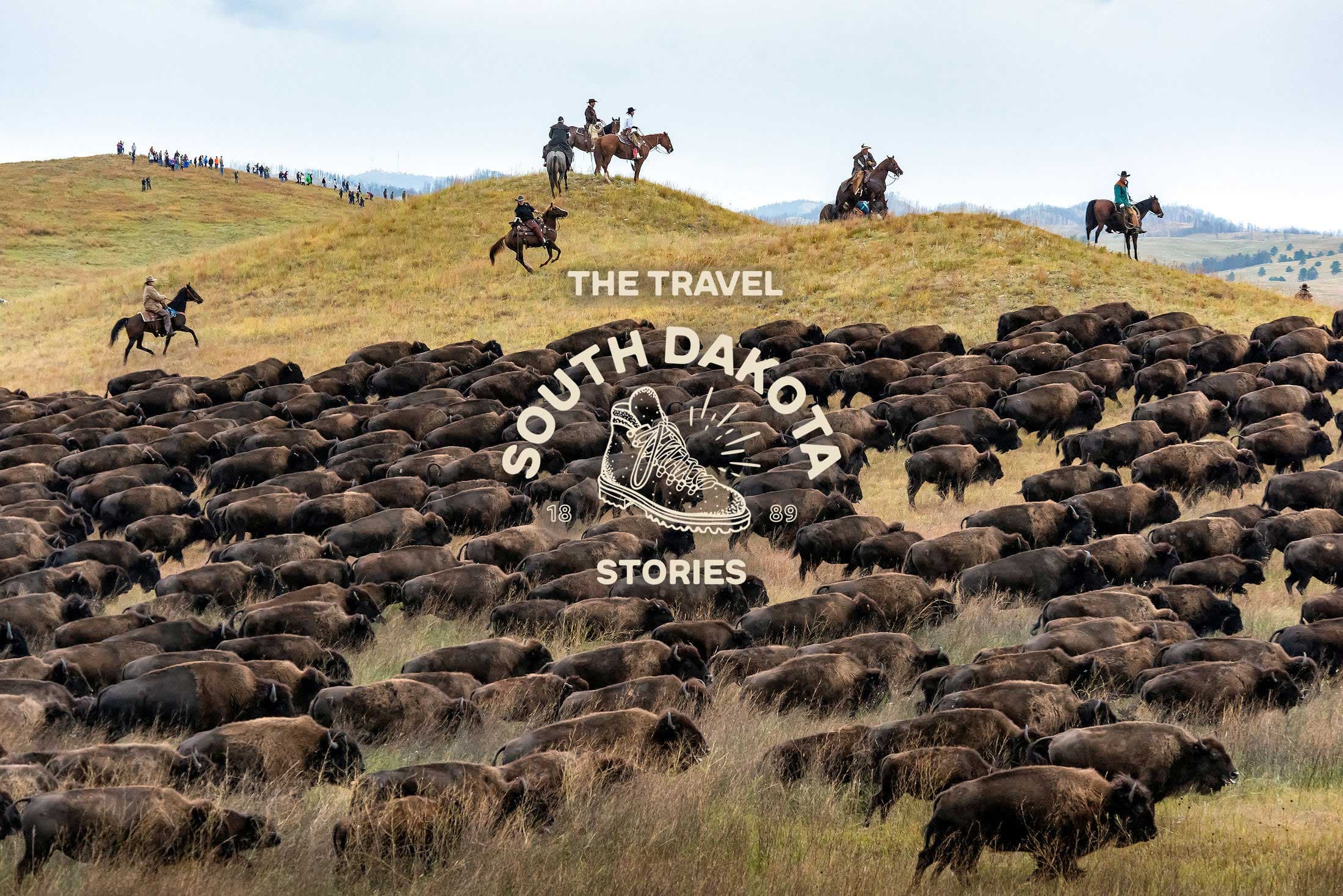
The Travel South Dakota Stories
An all-new podcast that delves deep into the true heart of South Dakota, with the people and stories from this wild, free and ancient land.