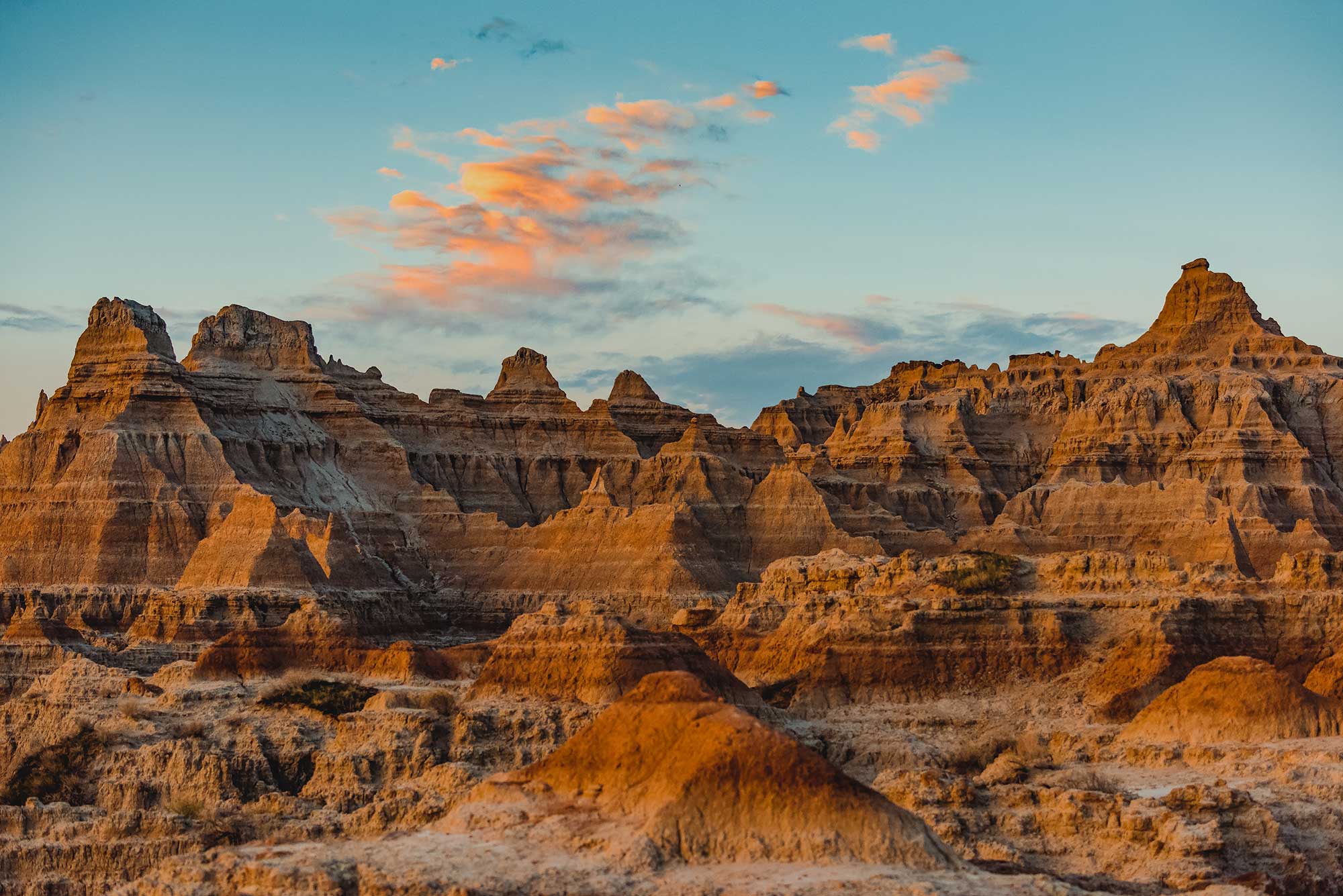
Your Guide to South Dakota’s Centennial Trail
Marking the 100th anniversary of South Dakota statehood, the Centennial Trail is a rugged path through the heart of the Black Hills.
The Centennial Trail is a 111-mile ribbon connecting some of western South Dakota’s most spectacular landscapes. The path spans from the ancient igneous crown of Bear Butte State Park in the north to the subterranean wonders of Wind Cave National Park near Hot Springs in the south.
Quick Facts:
Length: 111 miles
Start point: Bear Butte State Park
End point: Wind Cave National Park
Trailheads: 21
Completed in 1989 to celebrate the state's centennial, the trail winds through thick pine forests, rolling prairie grasslands and the jagged peaks of Black Hills National Forest. With 21 official entry points dotted along the way, it's easily accessed whether you’re planning a day trip or an epic multi-day thru-hike starting at either end.
Pro tip: When tackling the route, look for and snap a photo of the diamond-shaped markers for Centennial Trail 89.
View all entry points and campgrounds on the official Centennial Trail map

The Centennial Trail begins at Bear Butte State Park, home to some of South Dakota's most scenic hikes

Horseback riding is permitted along the Centennial Trail

Fort Meade Recreation Area is a popular spot for bicycling

Look for the markers along the Centennial Trail
Recreation
No two stretches of the Centennial Trail are quite the same. Whether you are casting a line into a stream, hiking through the Black Hills or rolling out a sleeping bag under a starlit sky, recreational opportunities vary by section given that the trail crosses multiple state and federal lands.
- Hiking: Permitted on all 111 miles of the trail.
- Mountain Biking: Allowed on most segments, with restrictions in the Black Elk Wilderness, Wind Cave National Park and the eastern portion of Bear Butte State Park.
- Horseback Riding: Welcome across the majority of the route, except within Wind Cave National Park and the eastern portion of Bear Butte State Park.
- Wildlife Viewing: Bison, elk, mule deer, pronghorn, bighorn sheep and other animals share the trail. Fishing is found wherever the trail meets the region's lakes, streams and reservoirs.
- Camping: Developed campgrounds, horse camps and dispersed backcountry camping are available along much of the route. Some of the most popular campgrounds include Elk Mountain Campground, Pactola Reservoir Campground, Sheridan Lake Campground and Legion Lake Campground. Read about camping in Custer State Park.
Centennial Trail Highlights

Bear Butte State Park
The northernmost portion of the trail is in Bear Butte State Park, home to the 4,422-foot namesake butte. Formed millions of years ago, Bear Butte began as molten rock that hardened underground. Over time, erosion wore away the surrounding softer prairie lands, revealing the landmark seen today. The area is sacred to many Indigenous tribes, and visitors are encouraged to respect religious practices in the area.
Nearby trailheads and campgrounds: Bear Butte Lake Trailhead, Bear Butte Campground

Fort Meade Recreation Area
Dipping into 6,700 acres of pine-covered hills and seemingly endless native prairie, the 11-mile segment in Fort Meade Recreation Area provides a dose of frontier history. Follow lands once trodden by soldiers of the 1878 military post, where interpretive signs and the Old Fort Meade Museum chronicle the cavalry fort's past. Today, it’s a favorite for mountain bikers and hikers, who trade punchy uphills for unobstructed views of Bear Butte rising against the horizon.
Nearby trailheads, campgrounds and horse camps: Fort Meade Trailhead, Alkali Creek Trailhead, Alkali Creek Horse Camp

Black Hills National Forest
Dominating the majority of the Centennial Trail, the Black Hills National Forest invites travelers into an ancient setting. Granite peaks and limestone canyons erupt from the pine canopy, born from hundreds of ancient magma pockets that cooled deep underground. According to scientists, this otherworldly terrain looks remarkably similar to how it did 40 million years ago. Clear mountain creeks slice through these hidden gulches, feeding into expansive lakes and reservoirs. Anglers should be sure to pack a rod; these rushing streams are teeming with plump trout.
Nearby trailheads and campgrounds: Elk Creek Trailhead, Dalton Trailhead, Dalton Lake Campground, Boxelder Forks Campground, South Boxelder Trailhead, Pilot Knob Trailhead, Deer Creek Trailhead, Rapid Creek Trailhead, Pactola Reservoir Campgrounds, Tamarack Gulch Trailhead, Brush Creek Trailhead, Dakota Point Trailhead, Sheridan Lake Campground, Spring Creek Trailhead, Flume Trailhead, Samelius Trailhead

Mount Rushmore National Memorial
The Centennial Trail passes within just a mile of Mount Rushmore National Memorial. Take a short detour to stand beneath the massive granite faces of America's most influential leaders before continuing your journey through the surrounding wilderness.

Black Elk Wilderness
Established by Congress in 1980, Black Elk Wilderness is the only federally designated wilderness area in the Black Hills National Forest. It’s also spiritually significant to many Indigenous people. Admire the view, or take a short side trip from the official trail and summit the 7,242-foot Black Elk Peak (formerly known as Harney Peak), the highest point in South Dakota.
Plan a backpacking trip in the Black Elk Wilderness
Nearby trailheads and campgrounds: Big Pine Trailhead, Willow Creek Trailhead, Lakota Lake Trailhead, Iron Creek Horse Camp

Custer State Park
The Centennial Trail winds through the western portion of Custer State Park, bringing trekkers close to The Needles formation as well as Badger Hole, the cabin of Charles Badger Clark, South Dakota's first poet laureate. As you move south, sprawling grasslands and the domain of the park's famous free-roaming bison herd come into view. Watching these massive, prehistoric icons graze is an unforgettable sight — just remember to give them a wide berth and admire their grandeur from a safe distance.
Nearby trailheads, campgrounds and horse camps: Iron Creek Trailhead, Legion Lake Campground, Badger Hole Trailhead, French Creek Horse Camp

Wind Cave National Park
The Centennial Trail terminates in the south at Wind Cave National Park, unveiling two entirely different worlds: one above the earth and one below. The surface of this 6-mile segment is alive with mixed-grass prairie, ponderosa pine hills and a meandering creek. Underground is home to one of the longest and most complex mapped cave systems in the world. Guided tours reveal speleothems like frostwork, dogtooth spar, dripstone and delicate boxwork — rare calcite structures shaped like honeycomb that coat the cave’s ceilings and walls.
Nearby trailheads and campgrounds: Highland Creek Trailhead, Norbeck Trailhead, Elk Mountain Campground

Spot wildlife ranging from roaming bison to burrowing prairie dogs at Wind Cave National Park

Many sections of the Centennial Trail are accessible for all ages and experience levels

Wind to the top of Bear Butte State along the Centennial Trail
Spot wildlife ranging from roaming bison to burrowing prairie dogs at Wind Cave National Park
Many sections of the Centennial Trail are accessible for all ages and experience levels
Wind to the top of Bear Butte State along the Centennial Trail
Know Before You Go
Permits: Permits vary by activity and area. A vehicle entrance license is mandatory for Custer and Bear Butte state parks. For Black Elk Wilderness, a free, self-issued wilderness permit is required at the registration box if you enter the area. If you plan to backcountry camp in Wind Cave National Park, a free permit is required.
Food & Water: Bring all provisions, as food is not available. Some campgrounds and access points provide drinking water, but taps are usually shut off during colder months. Cache water in advance and always filter raw sources. Reference the official Centennial Trail brochure for specifics.
Seasonal Considerations: Many of the campgrounds on the Centennial Trail are open from mid-May through mid-September, with the exception of Bear Butte and Elk Mountain campgrounds, which are open year-round.
Black Hills weather changes rapidly. Summer afternoons frequently bring sudden, severe thunderstorms with heavy rain, lightning and hail. High elevations hold snow into spring, while lower tracks get muddy. Check forecasts and pack layers.
Parking: Overnight and long-term parking is permitted at most of the 21 official trailheads. If leaving a vehicle overnight in Bear Butte State Park, Fort Meade Recreation Area or Wind Cave National Park, notify a park ranger or local authorities beforehand.
Explore more:
FAQs
Find answers to some of the most common questions about the Centennial Trail.
Explore More